Will my clients actually wear them?
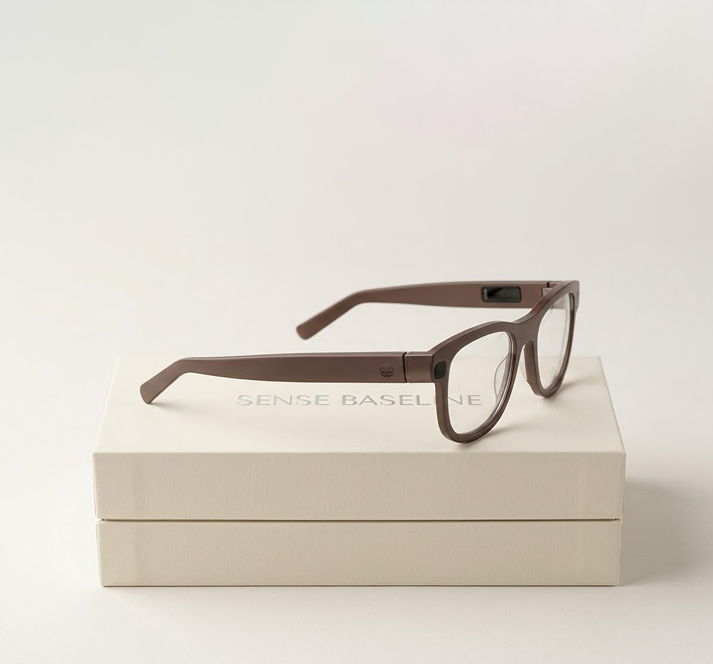
Designed as everyday eyewear, with clear or prescription lenses.


Sense Baseline passively measures daily habits such as eating speed, meal duration, snacking, meal timing, eating context, focus and activity while your client lives normally. You receive a practitioner report showing which behavior to target first.
Register your clinic for early accessFrom a team and partners from






Food diaries, recall and tracking apps capture what a client believes they ate. They rarely capture how they ate, or what was happening around the meal. Those patterns are linked to:
 GLP-1 tolerance and response
Blood sugar stability through the day
Gut symptoms and low-grade inflammation
Weight loss, regain and longer-term obesity risk
Cardiometabolic and brain health over time
GLP-1 tolerance and response
Blood sugar stability through the day
Gut symptoms and low-grade inflammation
Weight loss, regain and longer-term obesity risk
Cardiometabolic and brain health over time
You know this clinically. Until now you have inferred it from self-report.
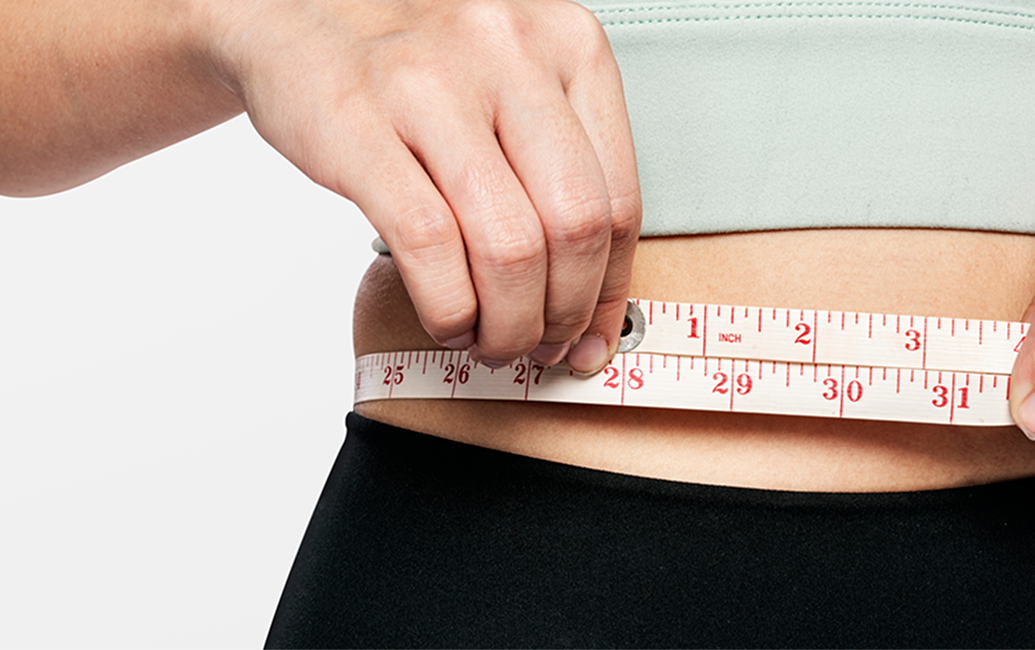
Your client wears Sense glasses through their normal day. The app asks for brief daily check-ins on sleep, mood, stress and symptoms. You receive a structured practitioner report.
While clients live their normal lives, Sense captures:
 Eating behavior
Eating speed, chewing patterns, meal duration.
 Meal timing
First and last intake, eating window, evening and night eating.
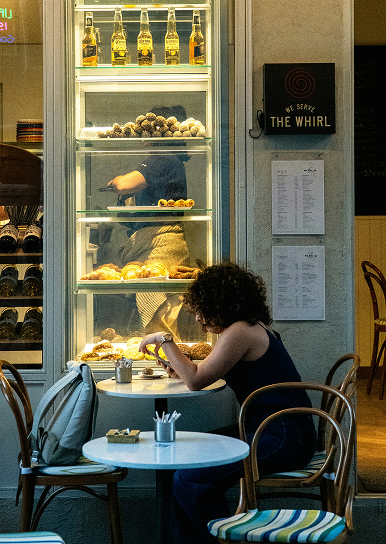 Snacking
Frequency, clustering and context across the day.
 Eating context
Distraction, screens, physical activity and posture.
The result is an objective baseline of the habits tied to self-reports that are hardest for clients to describe and hardest for you to see.
Instead of scrolling through raw data, you see structured, evidence-informed metrics that map directly to your interventions. You then choose which information to focus on with your client. You receive a clear practitioner view that surfaces:
 Eating rate, by meal and across the week
 Eating window, including first and last intake and night eating
 Snacking frequency, with the contexts it clusters around
Distraction and mindless eating, separating structured meals from grazing
Self-report overlay: sleep, mood, stress and symptoms set against eating patterns
Change over time, when you repeat a baseline
Snacking frequency, with the contexts it clusters around
Distraction and mindless eating, separating structured meals from grazing
Self-report overlay: sleep, mood, stress and symptoms set against eating patterns
Change over time, when you repeat a baseline
Export your practitioner view as a PDF or CSV. Integrations with electronic health records and clinic platforms are in progress.
Sense Baseline is designed for modern dietetic practice:




 Move from generic advice to specific behavior prescriptions
 Show clients concrete examples of “trigger meals” and unhelpful patterns
 Explain why nausea, bloating or energy crashes occur in the context of how they eat, not just
what
Explain why nausea, bloating or energy crashes occur in the context of how they eat, not just
what
 Align goals with what the client is actually doing today, not an idealised week on a tracking
app
Align goals with what the client is actually doing today, not an idealised week on a tracking
app
Clients see their own behavior reflected without judgement. That tends to open a conversation that another lecture about calories or macros will not.
 Support clients through GLP-1 therapy, including dose changes and discontinuation
 Work with obesity, weight cycling or metabolic risk
 Manage IBS-type symptoms or reflux, where eating patterns matter
 Run digital or hybrid clinics and need remote monitoring at scale
 Want outcome data that differentiates their service
Sense Baseline is not a first-line tool for eating disorders. Where an eating disorder history is present, use it only under clinical oversight.
 01
01
Provide a link for the Sense Baseline kit as part of your onboarding or programme.
 02
02
The client wears the glasses during waking hours and uses the app for minimal prompts and check-ins.
 03
03
You receive a practitioner report highlighting key behavior drivers and suggested discussion points.
 04
04
Repeat baselines or shorter monitoring windows to track progress, support relapse prevention and demonstrate impact.
Most clients tire of using tracking apps. Even when they log consistently, you are still blind to factors known to be important such as:
 Eating speed and meal duration
 Mindless snacking and grazing
 Late-night eating and irregular timing
 Eating while distracted by screens or work
 The gap between what clients intend and what they actually do
 The relationship between what they eat and how they feel
 Know whether logging stopped or eating changed
 Separate what a client intended from what they did
 See the meals that never get logged
 Target a specific habit rather than a calorie total
Blood tests are useful, but they provide a snapshot at one moment in time. They show what your biology looked like on one particular day, under one set of conditions. Even with a detailed list of blood tests, you are still blind to:
 How specific meals and eating speeds affect blood sugar through the day
The effect of mindless snacking and grazing between “proper” meals
How specific meals and eating speeds affect blood sugar through the day
The effect of mindless snacking and grazing between “proper” meals
 Short-term swings in energy, mood, and gut comfort that never reach a lab report
The impact of late-night eating on overnight recovery and morning markers
Short-term swings in energy, mood, and gut comfort that never reach a lab report
The impact of late-night eating on overnight recovery and morning markers
 How stress, sleep, and timing change responses to the same food
 Whether a result reflects the usual routine or just an unusually “good” or “bad” week
There’s a reason why snapshot blood tests for conditions like diabetes are being replaced with continuous monitoring using wearables.
Gut bacteria shift with what, when and how food was eaten, plus stress, sleep, travel and medication. Whilst these tests are useful, one sample cannot describe how everyday habits shape the gut over time. Even with advanced sequencing, you are still blind to:
 How eating behavior feeds the microbiome over days and weeks
 Short-term links between meals and symptoms like bloating or reflux
 Whether suggested "good" and "bad" food lists fit a person's actual lifestyle
 The real pattern of fibre, ultra-processed foods and late-night snacks across a week
 The difference between structured, mindful meals and constant grazing
 How the microbiome responds as one gradually changes their behavior
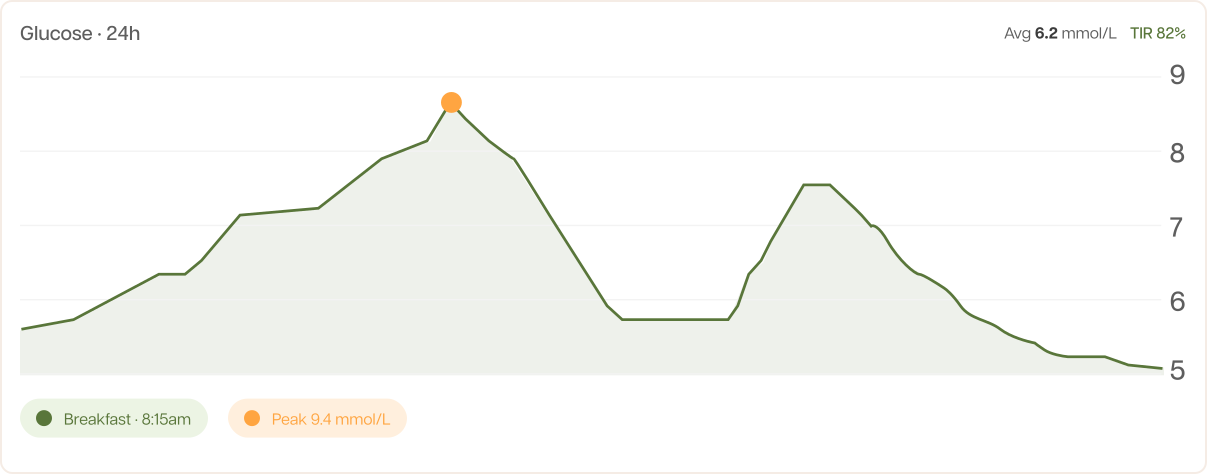
CGMs are useful, but they measure a single downstream signal, circulating glucose. They show you what happened, not why it happened. Even with 24/7 glucose data, you are still blind to:
 What was eaten, the portion size, and macronutrient mix unless it is logged consistently
 The difference between structured meals and grazing, if events are unlabelled or remembered selectively
 How eating speed, meal duration, and bite patterns shaped the spike, because the CGM captures no eating behavior such as eating speed or food order
 Whether these are driven by food, stress, poor sleep, illness, menstrual cycle effects, alcohol, or exercise, unless those contexts are accurately tagged
What is a meaningful trend versus normal variability, especially when the client changes several things at once
Whether these are driven by food, stress, poor sleep, illness, menstrual cycle effects, alcohol, or exercise, unless those contexts are accurately tagged
What is a meaningful trend versus normal variability, especially when the client changes several things at once